
On this page
- "Settling powder" is the common name for high molecular weight polyacrylamide flocculants.
- Three main types: anionic, cationic, non-ionic — each suits a different slurry chemistry.
- Correct make-up (0.1–0.3% solution, proper ageing) matters as much as the grade itself.
- A short jar test on your own slurry is the fastest way to confirm the right grade.
What is settling powder?
"Settling powder" is an industry shorthand for a class of high molecular weight polymeric flocculants — most commonly polyacrylamide (PAM) — supplied as a free-flowing white granular powder. When dissolved in water and dosed into a slurry, the polymer chains attach to fine suspended particles and bridge them together into larger, denser flocs that settle out of suspension far faster than the original particles.
Operators use several names for the same product depending on region and industry: settling agent, settling chemical, floc powder, polymer flocculant, or simply "poly". Chemically, most industrial grades fall into one of three families — anionic (APAM), cationic (CPAM) and non-ionic (NPAM) — each available in a range of molecular weights and charge densities.
How settling powder works
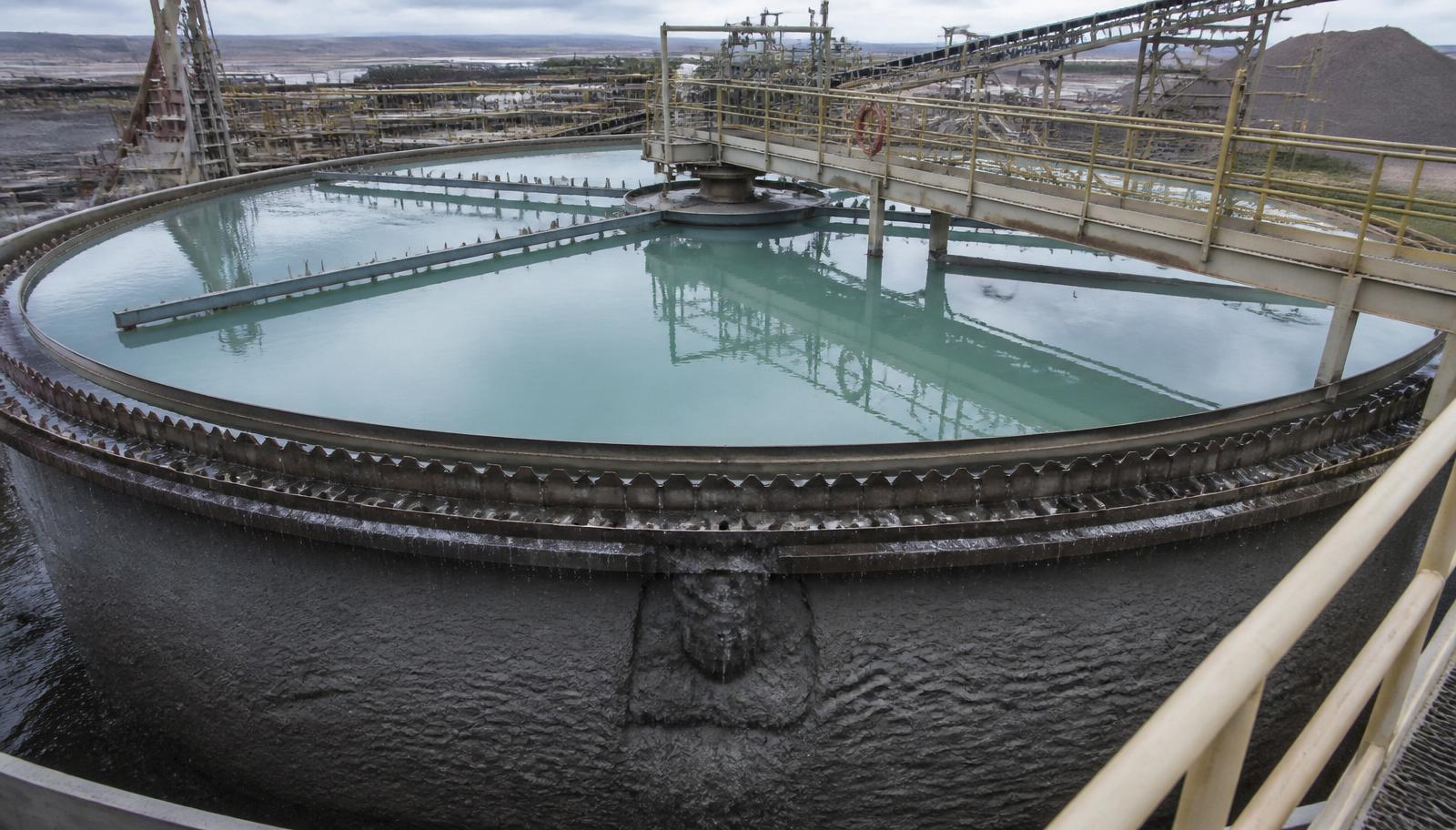
The mechanism has three simple stages. First, the dry polymer is dissolved in clean water and aged so the long chains can fully uncoil in solution. Second, the polymer solution is mixed into the slurry — individual chains adsorb onto multiple particles and physically bridge them together. Third, these agglomerated flocs grow large and dense enough to settle rapidly under gravity in a clarifier, thickener or settling tank.
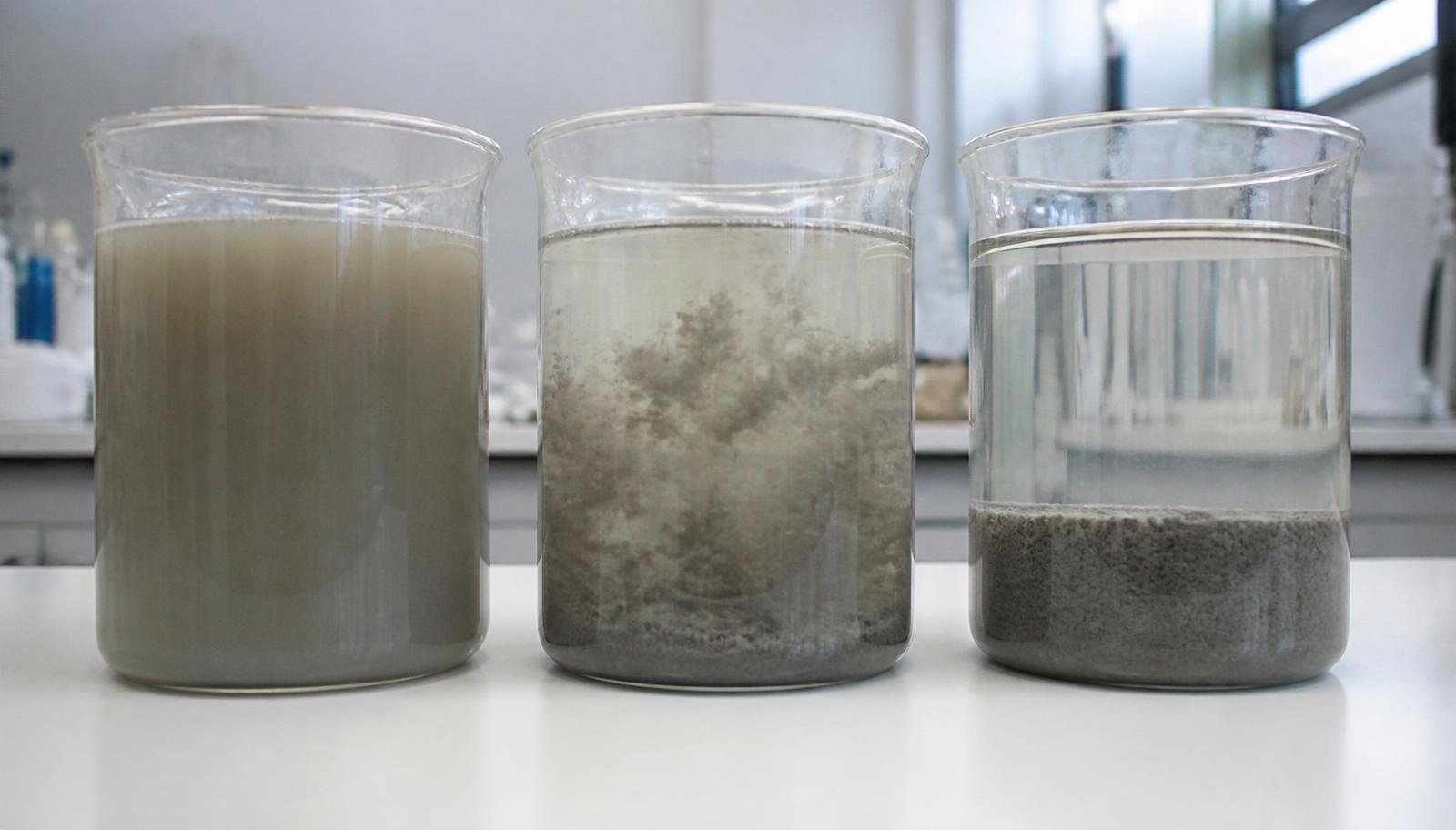
The result: what would take hours to settle naturally often settles in minutes. That translates directly into smaller clarifier footprints, higher throughput, cleaner overflow water for reuse or discharge, and thicker underflow that is easier to dewater downstream.
Grades — anionic, cationic, non-ionic
Choosing between grades depends on the surface charge of the particles you want to settle. A quick rule of thumb: inorganic mineral slurries usually respond to anionic grades; organic and biological sludges usually need cationic grades.
| Grade | Charge | Best for | Typical MW |
|---|---|---|---|
| Anionic (APAM) | Negative | Mineral slurries, DCP, coal, iron ore, ceramics, sand washing | High – very high |
| Cationic (CPAM) | Positive | Organic sludge, biological ETP sludge, paper mill retention | High – ultra-high |
| Non-ionic (NPAM) | Neutral | Low-pH streams, acidic mineral processing, specific chemical plants | High |
Within each family, molecular weight controls how much bridging the polymer can do, while charge density controls how strongly it interacts with the particles. Most plants settle on one or two grades that reliably cover their duty after a short evaluation.
Where settling powder is used
Settling powder is one of the most widely-used industrial chemicals in India for solid–liquid separation. Some of the most common applications:
Clarifying phosphate slurry and reducing settling time in continuous processing.
Fibre recovery on the wet end, white water clarification, DAF and ETP.
Iron ore, coal washeries, bauxite, sand washing, ceramic slurry.
Primary and secondary clarifiers, sludge dewatering with belt or filter press.
Juice clarification and sludge separation.
Colour and TSS removal in effluent.
Make-up and dosing basics
Correct preparation is just as important as choosing the right grade. Undissolved powder, over-concentrated solution or aggressive mixing all reduce performance and increase consumption.
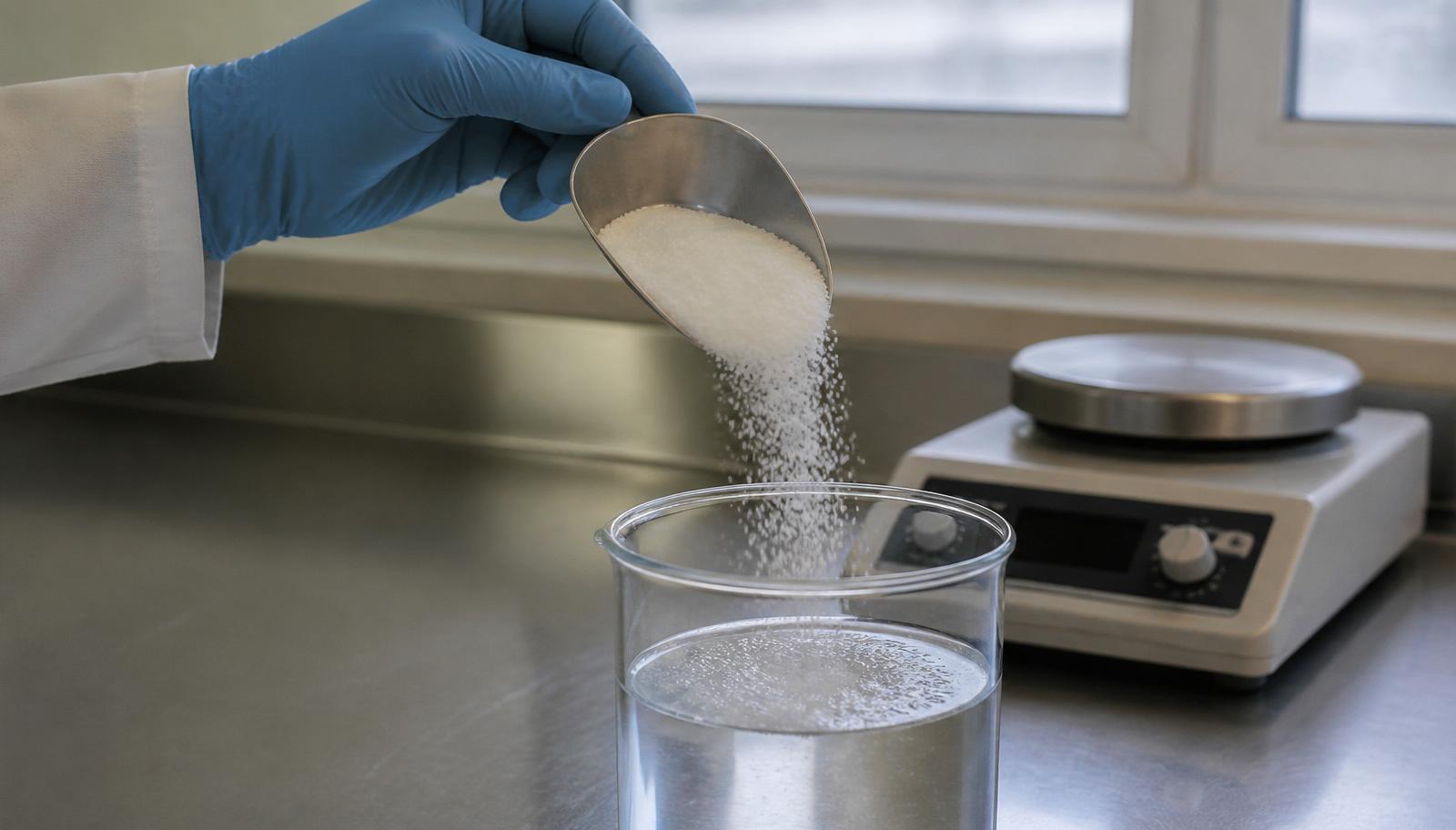
Prepare a 0.1% to 0.3% stock solution — i.e. 1 to 3 kg of powder per 1000 litres of clean water. Stronger solutions become too viscous to dose accurately.
Allow the solution to age with slow stirring for 30–60 minutes so the polymer chains fully uncoil before use.
Dose into a well-mixed but gentle zone — flash mixers destroy flocs; dead zones leave polymer unused.
Industry ranges of 1–10 g/m³ of slurry or 20–200 g/tonne of dry solids — confirm by jar test.
- • Powder added too fast — forms fish-eye lumps that never dissolve.
- • Over-dosing — extra polymer beyond the optimum wastes cost and can re-stabilise the slurry.
- • Solutions kept longer than 24 hours — activity drops noticeably.
- • Hot dosing water above 40 °C — accelerates polymer degradation.
How to select the right grade for your slurry
There is rarely one "universal" settling powder that fits every plant. Particle size, mineralogy, pH, temperature, solids loading and clarifier design all influence which grade performs best. The most reliable approach is a short structured evaluation:
- Describe the slurry — process, source, approximate solids %, pH and existing product (if any).
- Short-list 2–3 candidate grades — usually one from each charge family relevant to the stream.
- Run a jar test — compare floc formation, settling rate, supernatant clarity and sludge compaction.
- Confirm with a small plant trial — one 25 kg bag at plant scale to lock in the working dose.
We regularly help buyers through this process — start with a short conversation about the slurry, pick 2–3 sample grades, and take it from there.
Buying settling powder in India
Most buyers source settling powder in 25 kg HDPE laminated bags with an inner PE liner. Dispatch is by road transport, with lead time depending on quantity and destination. For continuous plants, planned monthly indents help maintain consistent supply without stock-outs.
Consistency of supply, willingness to provide sample support, and reliable documentation (invoice, e-way bill, transporter LR, MSDS or COA on request) usually matter more to plant operations than headline price alone.
Shree Brahmani Trading is based in Mehsana, Gujarat and supplies settling powder and related industrial chemicals to customers across Maharashtra, Rajasthan, Madhya Pradesh, Karnataka, Tamil Nadu, Andhra Pradesh, Telangana, Uttar Pradesh, West Bengal and Delhi-NCR.
Frequently asked questions
What is settling powder made of?+
Settling powder is typically a high molecular weight polyacrylamide-based polymer, supplied as a free-flowing white granular powder. Depending on the chemistry it is available as anionic (APAM), cationic (CPAM) or non-ionic grades. Non-polymeric mineral coagulants such as PAC and alum are sometimes used alongside it, but the term 'settling powder' almost always refers to the polymer flocculant.
How much settling powder do I need to dose?+
Typical industry dose ranges reported in literature are 1–10 grams of active polymer per cubic metre of slurry, or 20–200 grams per tonne of dry solids, depending on application. The actual dose for any specific plant should be confirmed with a jar test — real numbers vary with slurry chemistry, particle size and equipment.
Is settling powder the same as flocculant?+
In common industry usage, yes — 'settling powder', 'settling agent' and 'flocculant' are often used interchangeably to refer to the same class of polyacrylamide polymers. Technically, coagulants (like alum or PAC) neutralise particle charge while flocculants bridge particles into larger flocs. Many plants use both in sequence.
How is settling powder packed and supplied?+
Standard packaging in India is 25 kg HDPE laminated bags with an inner PE liner. Bags are typically palletised for road transport. Shelf life is usually two years when stored in a cool, dry warehouse away from direct sunlight.
Can settling powder be used for drinking water?+
Only specific grades certified for potable-water use are appropriate for drinking water treatment. Standard industrial settling powder grades are meant for industrial process water, effluent and slurry — not for treating drinking water. Always confirm the grade certification with the supplier.
Need help selecting a settling powder grade?
Tell us about your slurry — we typically suggest 2–3 candidate grades and arrange samples for evaluation before any bulk commitment.
Educational content only. All dose ranges are typical industry figures — confirm by jar test on your own slurry before any bulk commitment.