
Industrial Flocculant Solutions
Industrial polymers and flocculant solutions for settling, clarification, separation and process support applications — across paper mills, mineral processing, sand washing, DCP processing and chemical manufacturing.
- Anionic, Cationic & DCP settling agent
- Multiple grades on inquiry
- Sample evaluation support
- Wholesale supply across India
What are industrial flocculants?
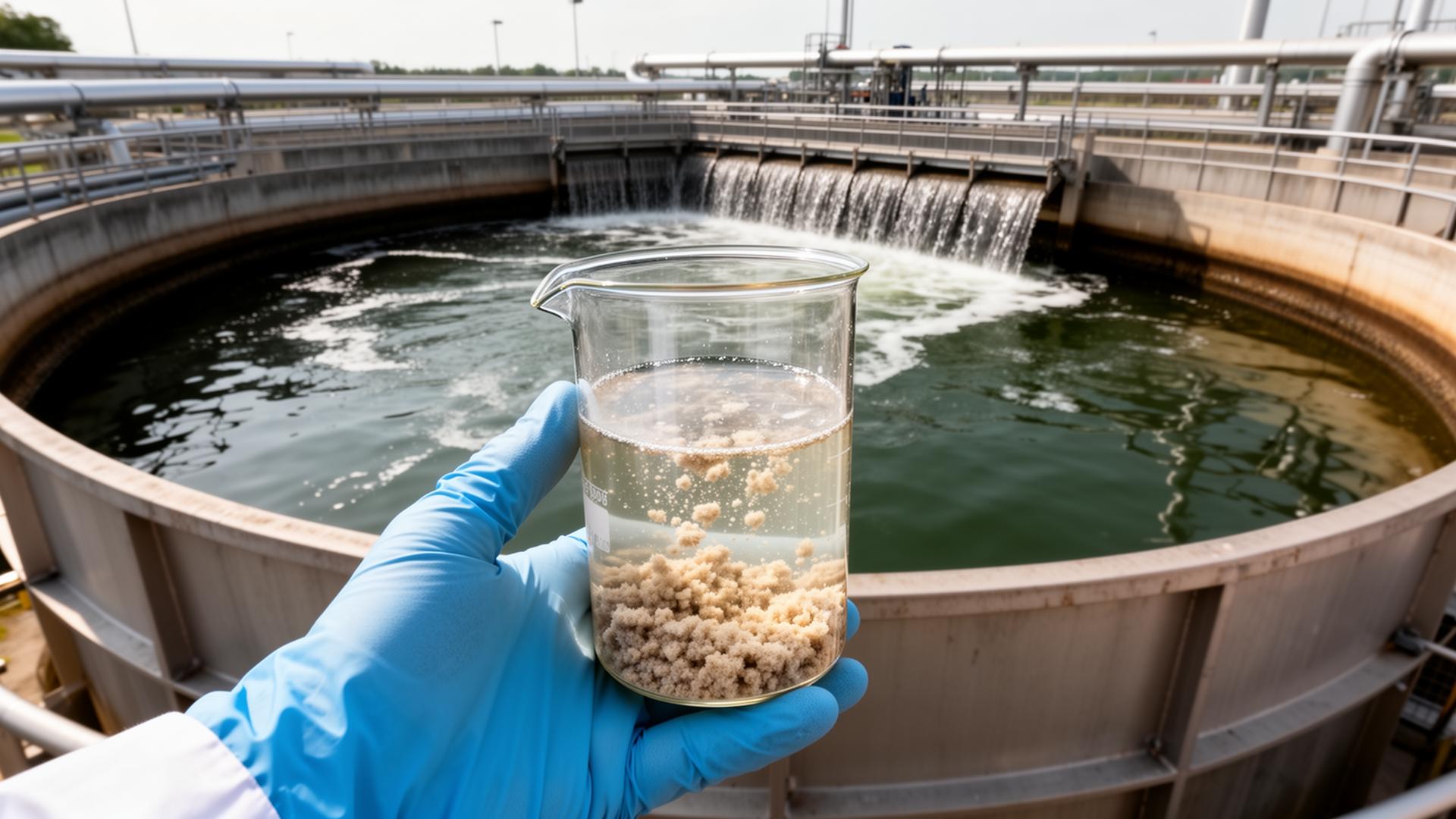
Industrial flocculants are chemicals — most commonly long-chain water-soluble polymers — that help fine suspended particles in water and slurry streams combine into larger aggregates called flocs. These flocs are significantly larger than the original particles and therefore settle, filter or dewater far more efficiently. In an industrial context, flocculants are not the end product; they are a process aid that supports clarification, settling, thickening and dewatering steps already built into the plant.
They are used because most fine particles in industrial water do not settle well on their own. Particles below a certain size remain suspended for very long periods, kept apart by surface charges and natural turbulence. Left untreated, this leads to slow settling, turbid overflow, poor clarifier performance and additional load on filters, washing systems and dewatering equipment downstream.
Particle aggregation in simple terms
When a suitable flocculant is introduced and properly dispersed, two mechanisms typically operate together. First, the polymer's ionic charge partially neutralises the surface charge on the particles, allowing them to come closer together. Second, the long polymer chains physically bridge multiple particles, anchoring them into growing flocs. These flocs continue to collide and combine in a gentle flocculation zone until they reach a size that settles or separates cleanly.
Clarification and settling
In a clarifier or settling tank, flocculated water is allowed to move slowly so the heavier flocs sink to the bottom while clarified water overflows from the top. The supernatant clarity, the rate at which the sludge layer builds, and the moisture content of the underflow are all directly influenced by how well the flocculation step has been carried out — and therefore by how well the flocculant has been selected, prepared and dosed.
Industrial process support
Across industries, flocculants sit inside a much larger process: paper machines, sand washing circuits, mineral thickeners, DCP reactor trains and chemical clarifiers all depend on consistent solid–liquid separation. A correctly selected flocculant supports that separation step so that throughput, downstream equipment loading and water quality remain within design expectations. Flocculation is, in this sense, an enabling step rather than a standalone product.
How flocculants work — step by step
At a working level, flocculation is best understood as a four-step sequence. Each step depends on the previous one, and the overall result depends on getting all four reasonably right.
- STEP 01
Particles remain suspended
Fine particles in water carry small surface charges that keep them apart. On their own, they settle very slowly — sometimes not at all on a practical timescale.
- STEP 02
Flocculant is introduced
A dilute polymer solution is dosed into the stream and dispersed. The polymer chains begin attaching to multiple particles, neutralising charge and creating bridges.
- STEP 03
Flocs grow and combine
In a gentle flocculation zone, flocs collide and combine into larger, denser aggregates. Mixing energy must be enough to encourage growth but gentle enough not to shear the flocs.
- STEP 04
Clarification improves
The larger flocs settle, filter or dewater more efficiently. Supernatant becomes clearer, underflow becomes denser, and downstream equipment operates closer to design intent.
  Fine particles      Polymer dosed       Flocs grow          Settling / clarification
  · · · · · · ·   →   ·~·~·~·~·~·~·   →   ●  ●  ●  ●     →   ────────────────  ← clear water
  · · · · · · ·       ·~·~·~·~·~·~·       ●●●●●●●●           ●●●●●●●●●●●●●●  ← settled flocs
The above is a simplified representation. Real-world flocculation depends on polymer charge, molecular weight, dosing point, mixing energy, residence time and feed characteristics — which is why product and grade selection is treated as an application-specific discussion.
Three solution categories
We make three core flocculant-related product categories available. Each is supplied in multiple grades and is positioned for different application chemistries. Click through for detailed product information.
Anionic Polyelectrolyte
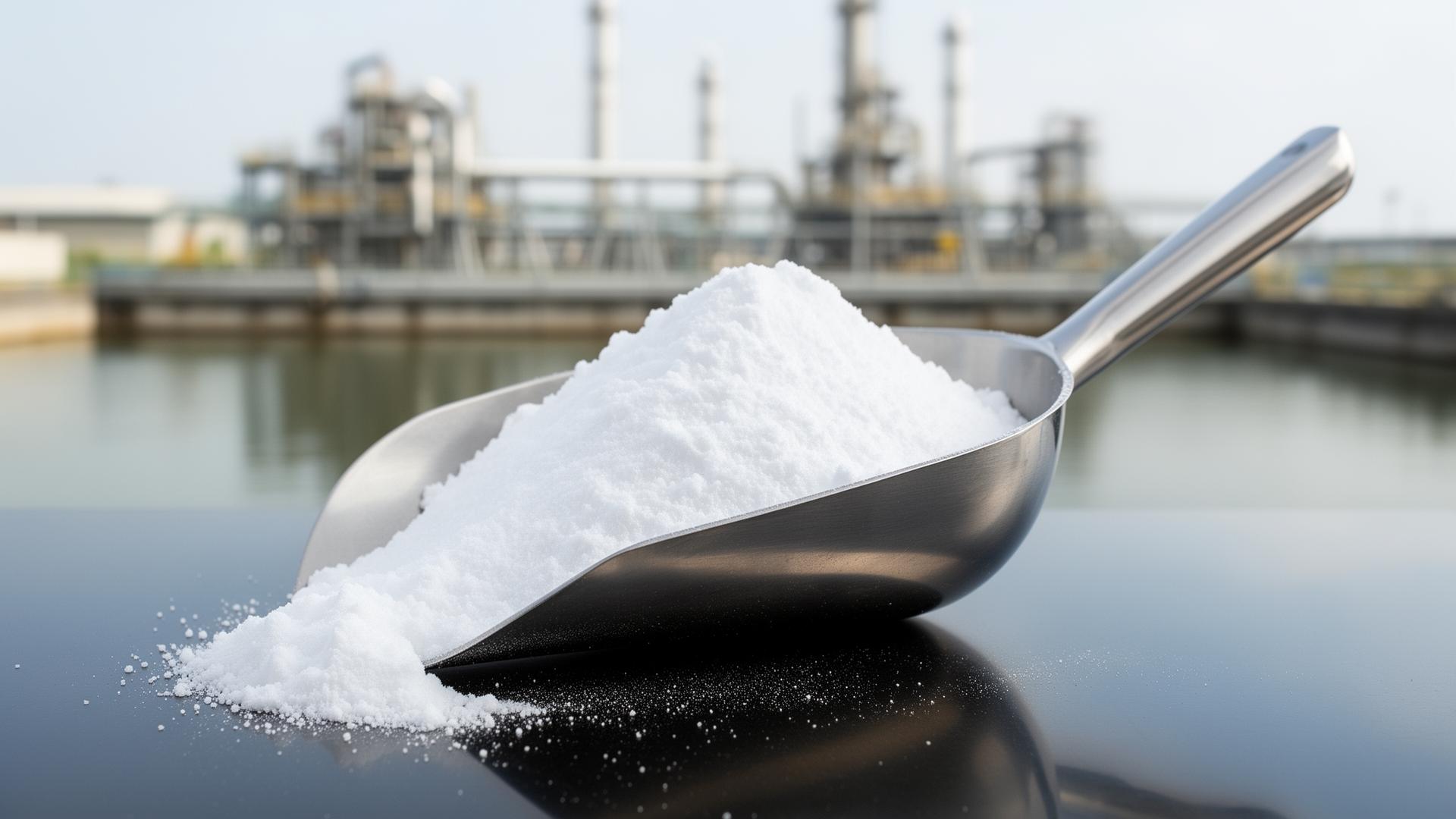
Polyacrylamide-based polymer carrying a negative ionic charge. Commonly considered for mineral processing, sand washing, industrial water clarification and applications involving inorganic suspended solids.
View Anionic Polyelectrolyte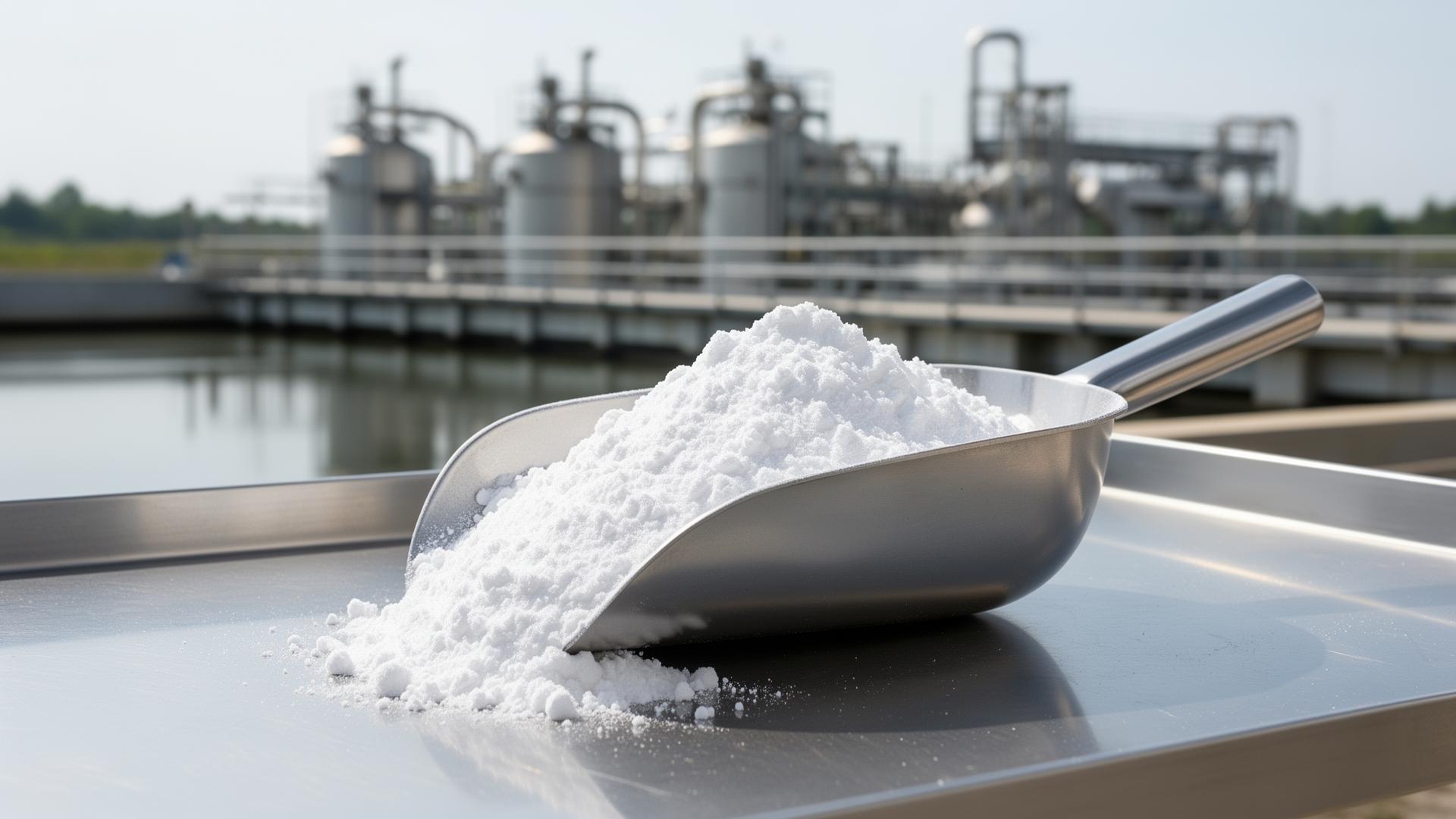
Cationic Polyelectrolyte
Polyacrylamide-based polymer carrying a positive ionic charge. Commonly considered for paper mill operations, sludge dewatering and applications involving organic or biologically derived solids.
View Cationic Polyelectrolyte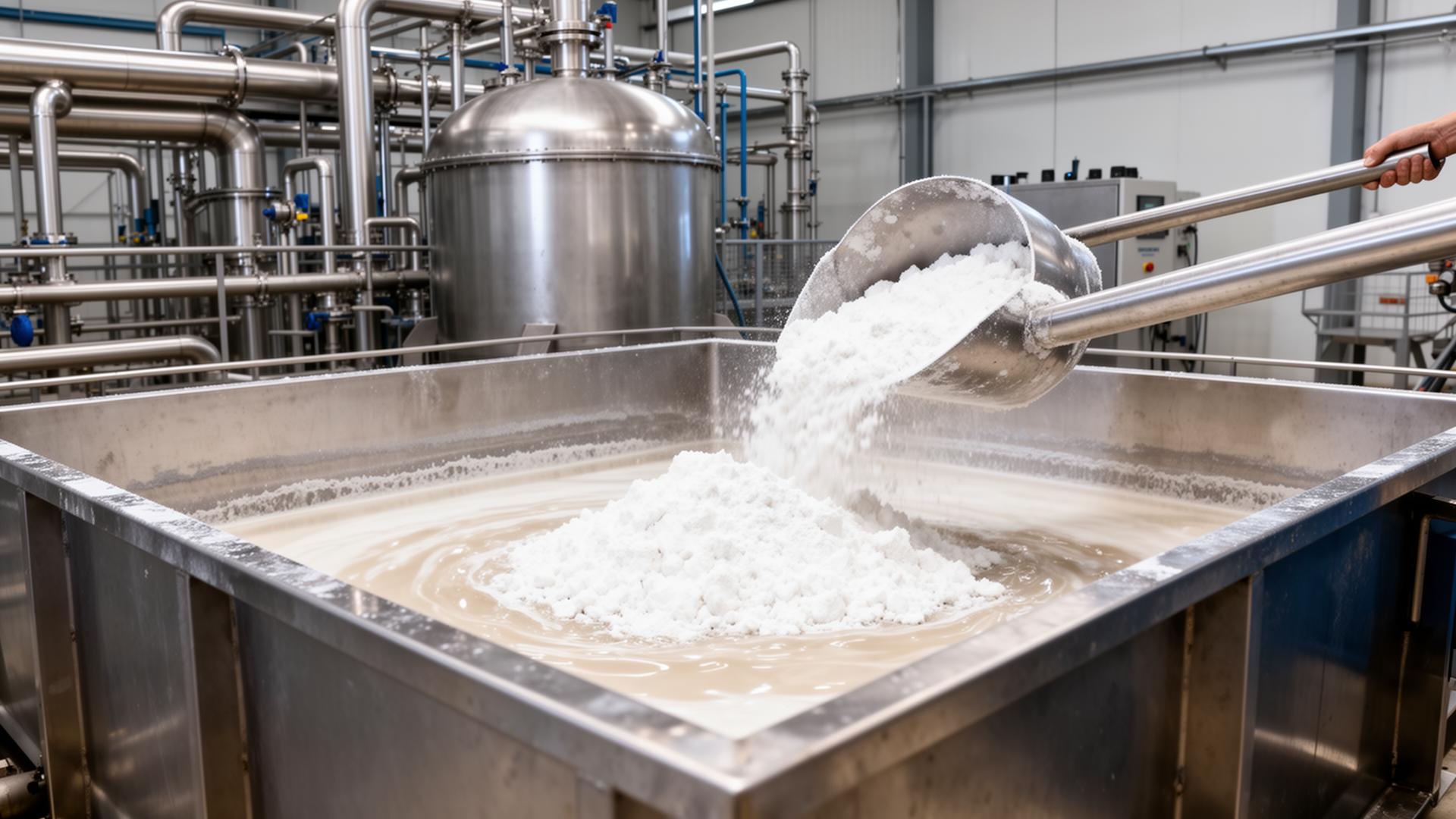
DCP Slurry Settling Agent
Industrial settling powder used as a process aid in DCP (Di-Calcium Phosphate) manufacturing and related phosphate processing operations where fine particle settling and clarification are part of the process.
View DCP Slurry Settling AgentWhere industrial flocculants are used
Industrial flocculants are considered across a wide range of process industries. The list below covers common application areas — it is not exhaustive, and suitability for any specific plant depends on application-level discussion and sample evaluation.
Paper Mills
Used in retention and drainage support, white water clarification and broke recovery — typically with cationic polyelectrolyte grades selected for the specific furnish and equipment.
Mineral Processing
Applied in thickener and clarifier operations handling fine mineral particles, where anionic polyelectrolyte grades are often considered for inorganic suspended solids.
Sand Washing
Used as a settling aid in sand and aggregate washing plants to support clarification of wash water and recovery of process water for re-use.
Industrial Processing
Considered in a wide range of industrial processes where solid–liquid separation is part of the production flow — including DCP and related phosphate processing.
Chemical Manufacturing
Applied in clarification and separation stages within chemical processing plants handling fine inorganic or organic solid loads in process and effluent streams.
Clarification Applications
Used across diverse clarification applications wherever fine particles settle slowly and supernatant clarity is a process or quality requirement.
We do not claim universal suitability across all industries or plants. Product and grade selection should always be confirmed for the specific application.
Choosing the right flocculant
Different applications may require different flocculant types and grades. The first decision is usually the polymer family — anionic, cationic or a settling agent specifically positioned for an application such as DCP slurry. From there, grade selection within the family considers charge density, molecular weight and intended use.
No single product or grade is suitable for every plant. Even within the same industry, two facilities can require very different grades because of differences in raw materials, water chemistry, equipment and operating practice. We treat product selection as a structured discussion rather than a fixed recommendation.
Sample evaluation may assist in product selection. Where useful, candidate grades can be trialled so that final selection is based on observed behaviour in the customer's own process rather than on generic specifications.
Selection typically depends on
Process conditions
Reactor design, residence time, temperature, mixing energy and dosing point
Water chemistry
pH, conductivity, hardness, presence of competing ions and dissolved organics
Solids characteristics
Nature of suspended solids (organic / inorganic / biological), size distribution and surface charge
Application requirements
Target supernatant clarity, settling rate, cake dryness and acceptable dosage window
Operating conditions
Equipment type (clarifier, thickener, belt press, decanter), and operational stability requirements
Application-specific review, before bulk supply
Product discussions are available across all three flocculant families. The aim of the discussion is to narrow down candidate products and grades quickly, based on the actual application, so that any sample evaluation is genuinely useful. Sample support is then arranged where appropriate, with dispatch and quantity confirmed on inquiry.
The evaluation process is application-specific — we do not promise performance outcomes in advance. Instead, the goal is to give the buyer enough trial information to make an informed decision before committing to bulk supply. This approach helps protect both technical fit and commercial reasonableness.
- Product discussions available
- Sample support available
- Structured evaluation process
- Application-specific review
Talk to Ratilal J. Patel
Mehsana, Gujarat • Pan-India inquiry support
WhatsApp Inquiry +91 9879146692Frequently Asked Questions
What is a flocculant?
+
A flocculant is a chemical — typically a long-chain water-soluble polymer — that helps small suspended particles in a liquid combine into larger aggregates called flocs. These larger flocs settle, filter or dewater more efficiently than the original fine particles. Industrial flocculants are widely used as process aids in clarification, settling, thickening and dewatering operations across many industries.
How do flocculants work?
+
Fine particles in industrial water and slurry streams usually carry a small surface charge, which keeps them dispersed and prevents them from settling on their own. Flocculants work through a combination of charge neutralisation and polymer bridging: long polymer chains attach to multiple particles, pull them together, and build them into larger flocs that separate more cleanly under gravity, filtration or mechanical dewatering.
What is the difference between anionic and cationic polyelectrolyte?
+
Both are polyacrylamide-based polymers, but they carry opposite charges. Anionic polyelectrolyte carries a negative charge and is generally considered for mineral or inorganic systems. Cationic polyelectrolyte carries a positive charge and is commonly used where suspended solids are organic or biologically derived — for example in paper mill operations or sludge dewatering. The correct choice depends on the application and is usually confirmed by sample evaluation.
How is product selection determined?
+
Product selection is treated as an application-specific discussion. We typically begin by understanding the process — feed characteristics, water chemistry, equipment in use, and operational objectives. Based on this, one or more candidate products and grades are suggested. Final selection is best confirmed once trial behaviour is observed in the actual process.
Can different grades be available within a product family?
+
Yes. Each product family — anionic polyelectrolyte, cationic polyelectrolyte and DCP slurry settling agent — is available in multiple grades that vary in charge density, molecular weight and intended use. Multiple grades exist precisely because no single grade suits every plant.
Is sample evaluation support available?
+
Yes. Because flocculant performance depends on plant-specific conditions, we encourage sample evaluation before bulk supply. Sample availability and dispatch are confirmed on inquiry based on the application, requirement and customer location.
What industries use industrial flocculants?
+
Industrial flocculants are used across paper mills, mineral processing operations, sand and aggregate washing plants, DCP and phosphate processing facilities, chemical manufacturing units and a wide range of other industrial clarification applications. The product and grade considered depends on the specific application.
Do you guarantee performance?
+
No. We deliberately avoid guaranteed performance claims. Flocculant behaviour depends on operating conditions, equipment, dosing arrangement and feed characteristics, all of which vary between plants. Our role is to share relevant product options, support sample evaluation and help the buyer make an informed decision based on observed trial behaviour.
Are flocculants supplied as powder or liquid?
+
The products covered on this hub are supplied as industrial powder products. Powder polymers are typically prepared as a dilute working solution in clean water at the plant before dosing, using appropriate mixing and ageing arrangements.
How do I request a discussion or sample?
+
Share your application requirement on WhatsApp, by phone or via our inquiry form. Our team will revert with relevant product options across anionic polyelectrolyte, cationic polyelectrolyte and DCP slurry settling agent — along with sample evaluation discussion where useful.
Working with us
Multiple Product Options
Three core flocculant categories — anionic, cationic and DCP settling agent — each available in multiple grades on inquiry.
Sample Evaluation Support
Where useful, sample evaluation can be arranged so that grade fit is confirmed in the customer's actual process.
Product Discussion Assistance
Practical product discussion before selection — without unsupported performance claims or guaranteed-outcome marketing.
Wholesale Supply
Competitive wholesale supply terms based on product, grade, packaging and quantity confirmed on inquiry.
Industrial Application Focus
Focus on industrial buyers, plant operators and procurement teams across a wide range of process industries.
Pan India Inquiry Support
Inquiry and dispatch support across India, handled from our Gujarat base via WhatsApp, phone and inquiry form.
Need Help Selecting a Suitable Flocculant?
Share a few details about your application and our team will revert with relevant options across Anionic Polyelectrolyte, Cationic Polyelectrolyte and DCP Slurry Settling Agent — along with sample evaluation discussion where useful.
Contact: Ratilal J. Patel
Location: Mehsana, Gujarat, India
Email: shreebrahmanitrading91@gmail.com
Request Information
Tell us about your application — our team will revert with relevant flocculant product options.